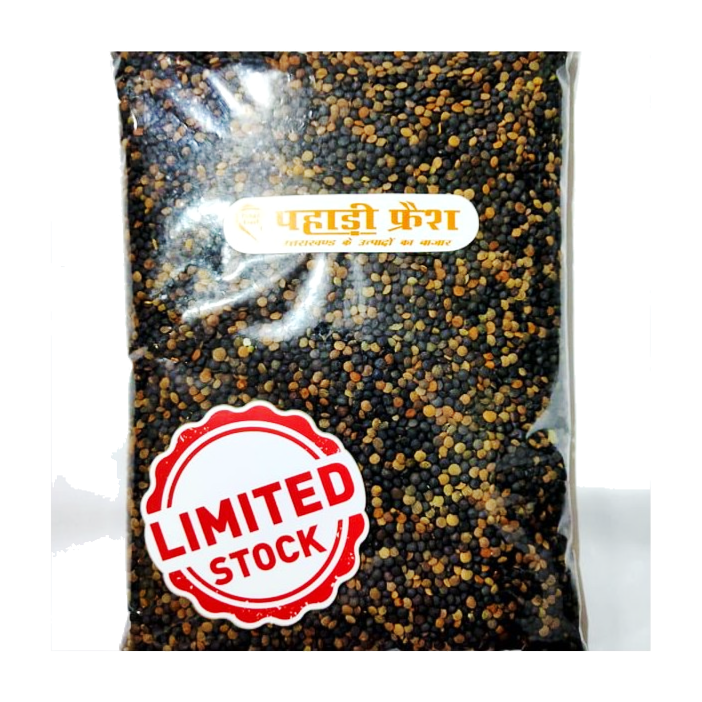
₹482 · UTTRAKSH ENTERPRISES, New Delhi. Cash on delivery across India. पहाड़ी काली मसूर दाल — black masoor, whole lentils with a dark skin, grown in the…
पहाड़ी काली मसूर दाल — black masoor, whole lentils with a dark skin, grown in the Uttarakhand hills and sold here in a 1 kg pack by Uttraksh Enterprises in New Delhi. Whole masoor holds its shape when cooked: soak it for a couple of hours, pressure-cook with turmeric and salt, and finish with a tadka of jakhiya or cumin, garlic and red chilli. It is eaten with rice or mandua roti, and a spoon of ghee on top is the Pahadi finish. Store in an airtight container in a dry cupboard.
Yes. UTTRAKSH ENTERPRISES takes cash on delivery, so nothing is paid up front and nothing is charged until the parcel is in your hands.
Arrives by Mon, 16 Nov for most addresses. It is packed and sent by UTTRAKSH ENTERPRISES in New Delhi — not from a warehouse — so it leaves the hills the same week you order it.
UTTRAKSH ENTERPRISES, in New Delhi. Basket of Pahad does not hold stock or pack parcels — the shop does both. We take the payment and hold it until the order reaches you.
Food that has been opened cannot be returned. Anything that arrives damaged, leaking, short, or not what the page said is refunded in full — tell us within 48 hours.
Hill dals are earthier and stronger than the polished dals of a city store, and most keep a bite even when fully cooked. Gahat cooks into a dark, slightly bitter liquor, bhatt is nutty and smoky when roasted, and hill rajma is small, soft and sweet.
Most are cooked simply with salt and turmeric and finished with a tadka of ghee, jakhiya, garlic and dried red chilli, then eaten with rice. Gahat goes into ras and stuffed parathas, bhatt into chudkani and dubke, and rajma into the slow Sunday pot. Several are traditionally eaten in winter.
Store in an airtight steel or glass container in a dry cupboard. In the monsoon, if the dal feels damp, spread it in the sun for an hour before closing it up again. A few dried neem or bay leaves in the container is the hill way of keeping insects off.
Whole dried dals usually keep for many months, often a year, in a sealed container. The pack's label gives the shop's own best-before date.
For most hill dals, yes. Gahat, rajma and whole urad need a soak of eight hours or overnight, then a pressure cooker. Bhatt is roasted dry for snacking and is soaked or fried for chudkani depending on the recipe. Split dals such as masoor need only a short soak or none.
These dals are threshed and cleaned by hand, not machine-sorted. Spread a handful on a plate and pick through it before washing; it takes a minute.
Hill dals are unpolished and grown on dry terraces, so the grains are harder. A longer soak and a few more whistles fix it. Older stock also takes longer, which is another reason to buy what you will use in a season.
They come from small family plots, often a few fields mixed together, and are not graded by machine. Size makes no difference to taste.
पहाड़ी काली मसूर दाल / pahari kali masoor daal / Lentils Beans